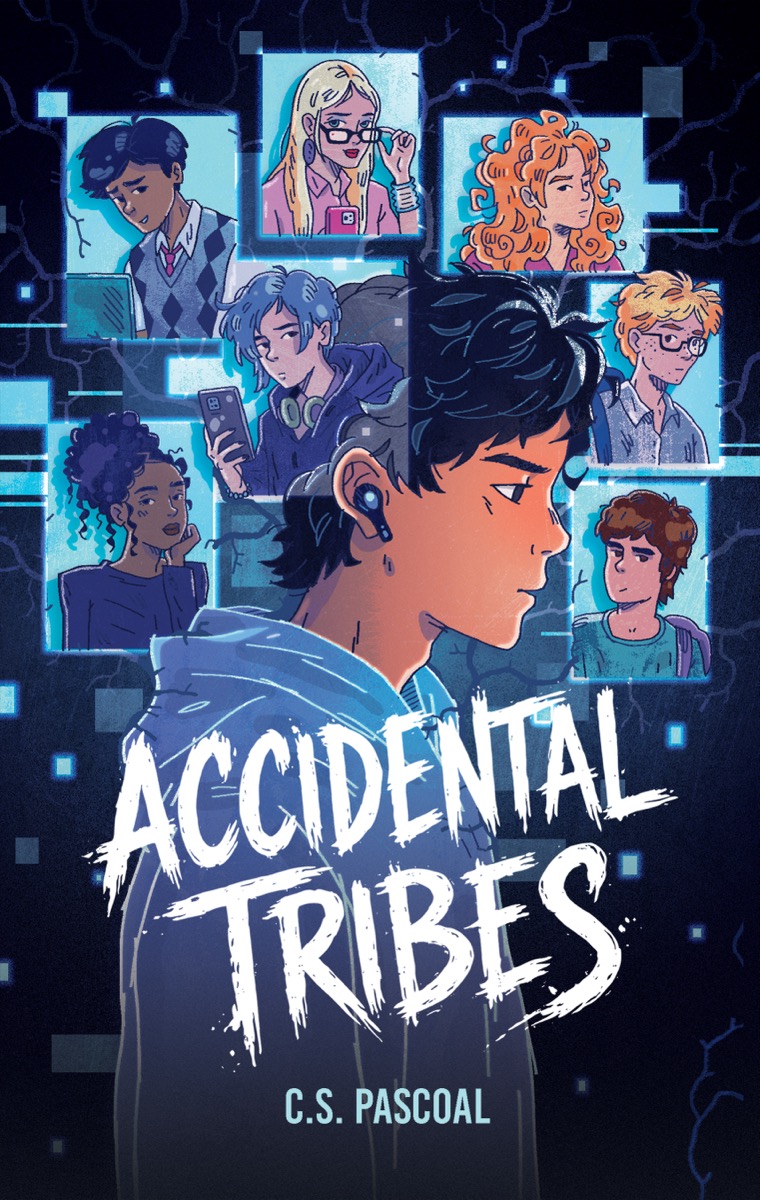
A screenshot or rumor can shape how a teenager is seen long before anyone asks what happened. C. S. Pascoal discusses digital reputation and its role in Accidental Tribes.
Why is online reputation such a high-stakes issue for teens?
In Accidental Tribes, digital reputation matters because young people can be judged by material that travels much farther than their own explanation ever will. A screenshot can lose its context. A joke can acquire an audience it was never intended to have. A falsehood can become familiar enough to seem true.
There is also the difficulty of knowing where that material has gone. Someone experiencing teen online harassment may feel exposed without knowing who has seen it or what they believe. That uncertainty can follow them into ordinary interactions. The novel explores how a public story about someone can enter their private life and affect their ability to trust.
How does the book show the gap between who someone is and how they appear online?
The gap between a person and their online image is central to Accidental Tribes. As readers get to know the students beyond their reputations, they encounter vulnerabilities and contradictions that a public label cannot capture. Knowing what has been posted about someone is a very limited kind of knowledge.
Fiction gives us time with a person. We can witness hesitation, competing desires, and the distance between what someone says and what they are trying to protect. That fuller view matters. It reminds readers how much can be missing when a person is reduced to a post, a rumor, or a reaction.
What do you hope readers question about their own digital footprints?
I hope Accidental Tribes encourages readers to question both what they leave behind online and what they help circulate about others. Before sharing something, they can ask: Do I know this is true? What context is missing? What could my participation do to another person?
I would also like readers to consider the difference between having access to something and having a thoughtful reason to share it. A private message or vulnerable moment can become entertainment very quickly. Pausing gives us time to remember that the person involved has a life beyond the content in front of us.
About the Author
C. S. Pascoal is a technology and social-impact entrepreneur and the author of Accidental Tribes. Based in New York City, she founded UnBoxMe and has worked at the intersection of technology, entrepreneurship, and social impact.
Book website · Instagram · TikTok · YouTube · LinkedIn